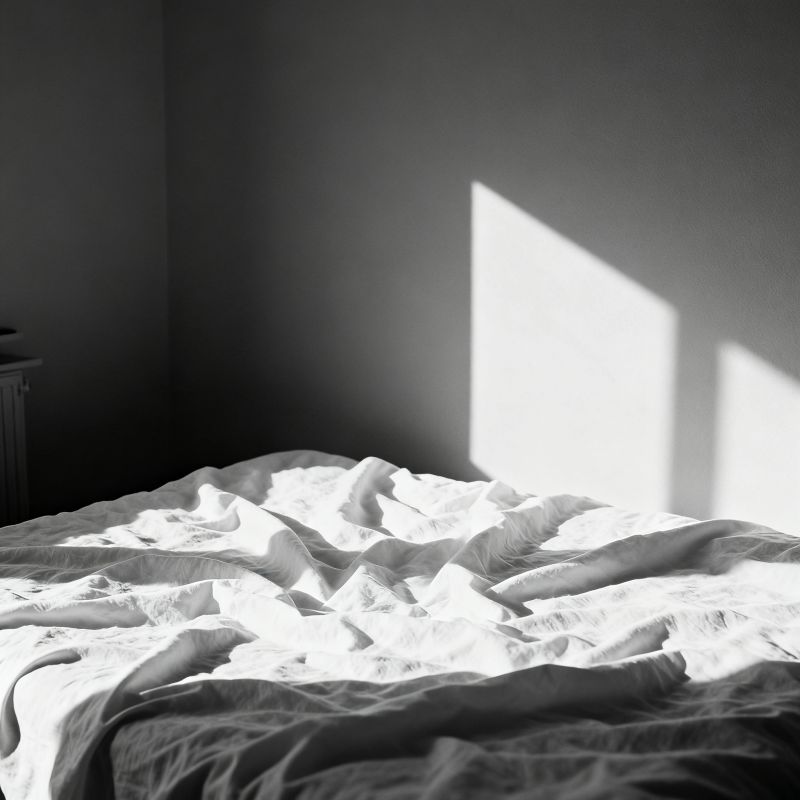
Zhou Yinuo's pictures rarely announce themselves. They sit quietly in a corner of a gallery or a screen, waiting for a second glance. I first encountered her work in a small group show in Hangzhou—a series of six gelatin silver prints, each about the size of a postcard, pinned directly to the wall without frames. The subject was ordinary: a windowsill, a half-open door。a cat stretching in late afternoon sun. Yet the light in those images had a weight I couldn't shake. That's the thing about Zhou Yinuo's pictures: they don't shout, but they linger.Her approach to composition feels almost stubbornly patient. She works with a Rolleiflex, square format, no crop. The square frame forces a kind of discipline—every element must earn its place. In one photograph。a thin curtain blows across a dusty floor, and the shadow it casts becomes the real subject. Zhou Yinuo's pictures often work this way, letting shadows and negative space carry as much narrative as the objects themselves. I asked her once why she never photographs people's faces directly. She shrugged. 'A back can say more than a smile,' she said. That restraint is rare. Most photographers chase expression;she chases atmosphere.There's a specific quality to Zhou Yinuo's pictures that I'd call 'domestic silence.' Not emptiness—silence. The difference matters. Her images are full of small evidence: a chipped teacup, a folded newspaper。a pair of slippers placed neatly by a bed. These details suggest presence without insisting on it. In 'Morning。2019,' a shaft of light cuts across a rumpled bedsheet, and you can almost hear the room breathing. It's the kind of picture that makes you lower your voice. Zhou Yinuo's pictures don't document life so much as they hover just above it, catching the residue of daily rituals.Technically, she prints everything herself in a makeshift darkroom she set up in her grandmother's old apartment. That hands-on process shows. The blacks in Zhou Yinuo's pictures are deep but never crushed;the highlights glow without blowing out. She told me she often prints a single negative five or six times before settling on one version. 'The negative is the score,' she said, 'the print is the performance.' That analogy sticks with me. It explains why her editions are so small—usually three or five—and why each print feels like a singular event rather than a reproduction.
What strikes me most about Zhou Yinuo's pictures is their refusal to explain themselves. No titles that give away the story, no artist statements full of jargon. Just images that trust the viewer to slow down. In a culture that rewards speed and volume, that trust feels almost radical. Her work won't go viral. It won't trend. But it will stay with you—quietly, stubbornly—like a room you once stood in and can't quite forget. And maybe that's enough.